
Image source: instagram.com/p/DZz-P2aiJGv via @marketingmentor.in June 20, 2026
"You don't need to see our name to know it's Levi's." The line that made me stop and think about this whole story
Here's what happened: During the 2026 FIFA World Cup, FIFA's Clean Stadium Policy forced every host venue to erase non-official branding. Levi's Stadium in Santa Clara backed by a $220 million naming-rights deal got stripped of its name, renamed "San Francisco Bay Area Stadium," and had all four of its giant Batwing logos draped in white tarps.
What caught my attention is what happened next. Instead of protesting, Levi's leaned into it turned the cover-up into a campaign, changed their social media profile picture to the shrouded logo, and rolled the same concept out to retail stores worldwide. The result: 9M+ TikTok views, 700K+ Instagram likes within 24 hours, and wall-to-wall earned media coverage all without spending a single dollar on official sponsorship rights.
Image source: instagram.com/p/DZz-P2aiJGv via @marketingmentor.in June 20, 2026
Image source: instagram.com/p/DZz-P2aiJGv via @marketingmentor.in June 20, 2026
Sources: Meltwater / CNBC, MSN, Operations Sports, Livemint, FIFA 2026 reporting.
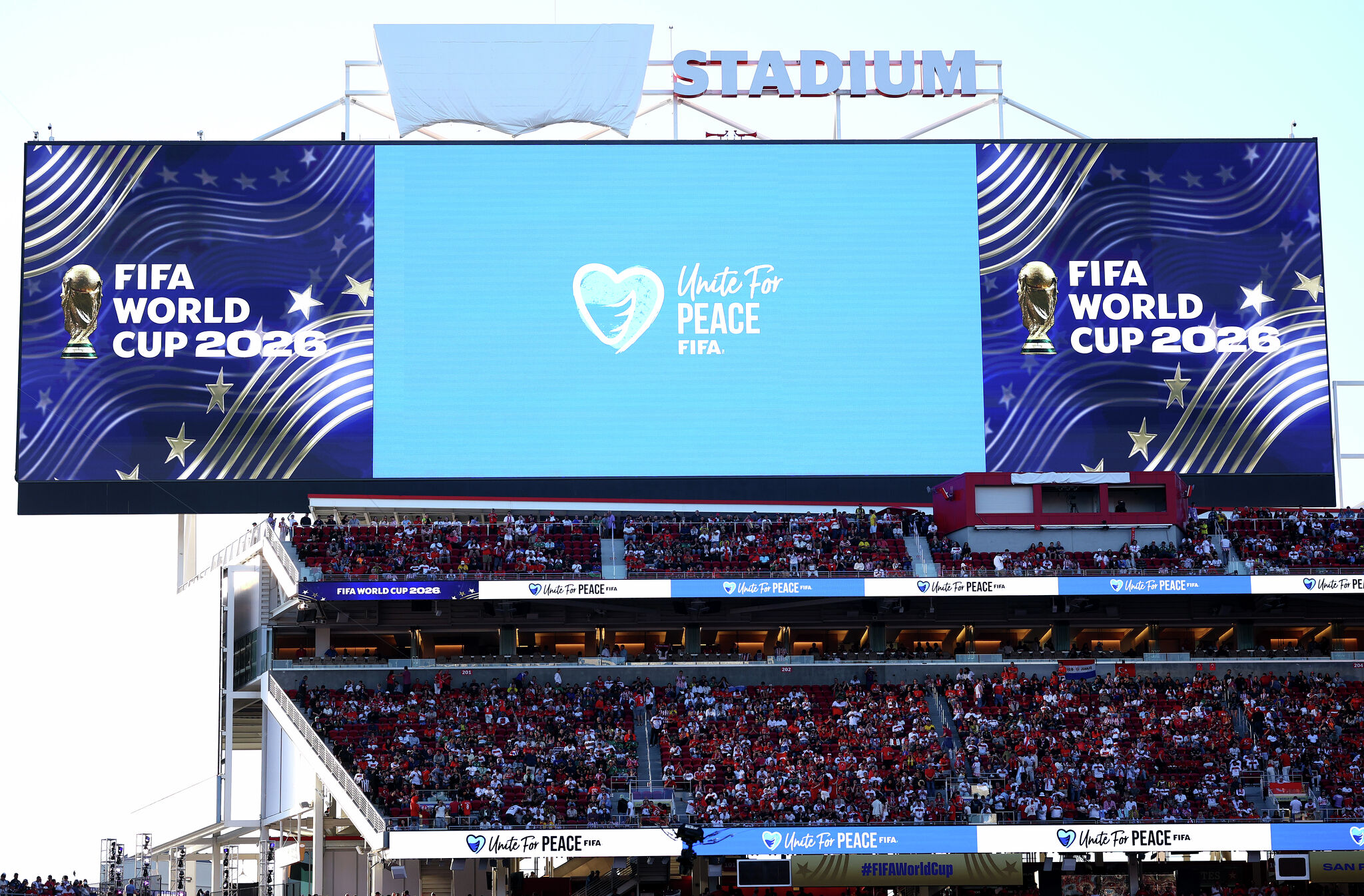
Levi Strauss & Co. is a 170-year-old denim institution. Its Batwing logo is one of the most recognizable marks in global apparel. Levi's Stadium home of the San Francisco 49ers since 2014, capacity 68,000 was one of 16 North American venues hosting FIFA World Cup 2026 matches.
The problem: Levi's is not a FIFA sponsor. The 2026 World Cup attracted a record $2.8 billion in sponsorship. Partners like Adidas, Coca-Cola, Visa, Aramco, and Qatar Airways paid eight and nine-figure sums for exclusive visibility and FIFA's job was to protect that investment.
Every venue hosting a World Cup match must remove, cover, or obscure any commercial branding not belonging to official FIFA partners. This includes stadium names, all signage visible to TV cameras, condiment bottles in press boxes, and logos on products worn by players in pre-match areas.
During 2026: AT&T Stadium → Dallas Stadium. Gillette Stadium → New England Stadium. Heinz Field → Western Pennsylvania Stadium. Levi's Stadium → San Francisco Bay Area Stadium. All 15 venues with naming sponsors were de-branded for the duration of the tournament.
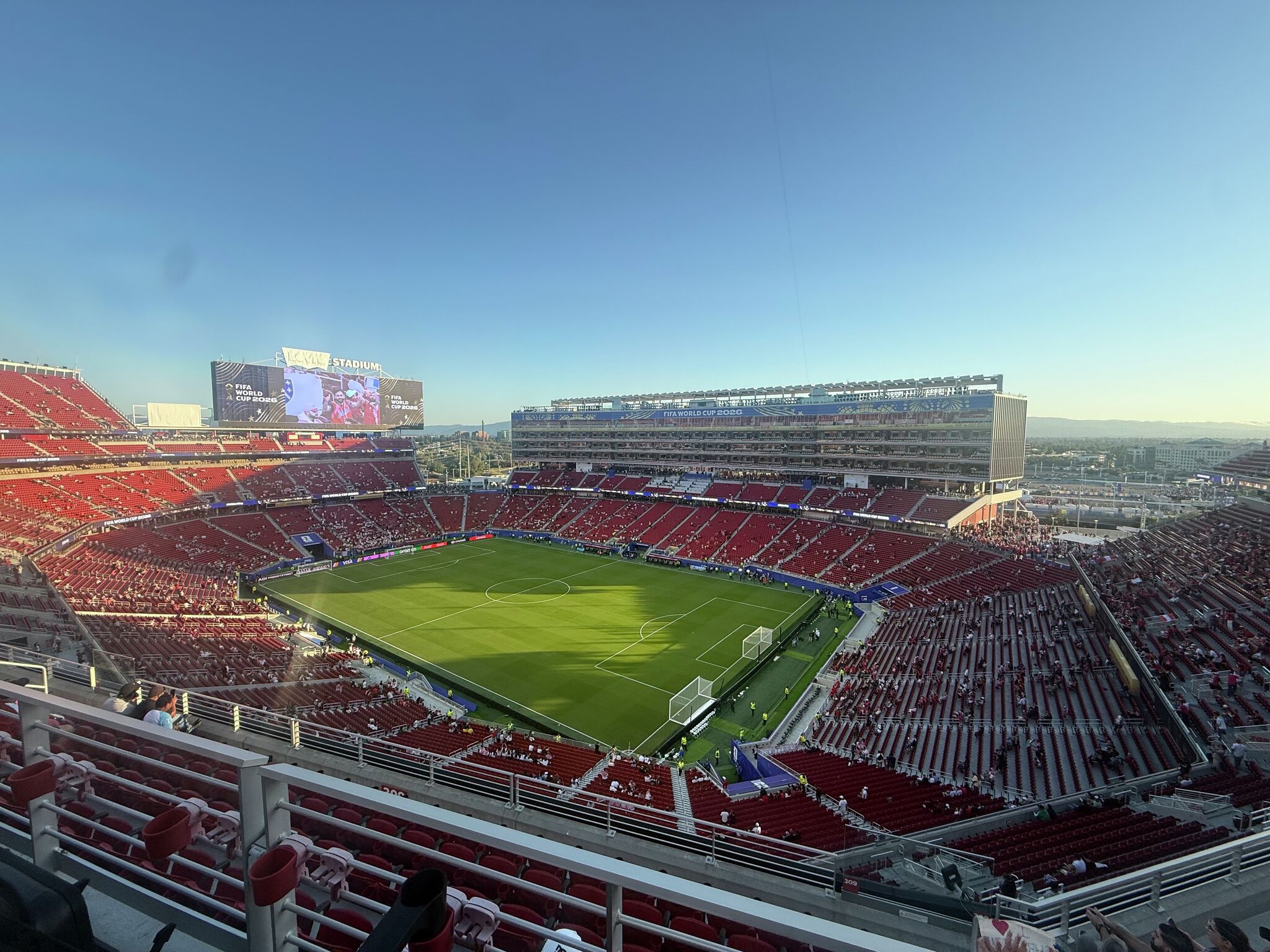 Southwest view inside the stadium during World Cup branding stripped, name changed · Alex Simon / SFGate
For any brand, losing visibility during a 5-billion-viewer global event would be a crisis. For Levi's, the setback was unusually public four giant exterior logos draped in white cloth, stadium name erased, zero TV presence. What I find fascinating is that a viral TikTok by user Dylan Gold documenting the cover-up surpassed 5.8 million views before Levi's could even respond.
FIFA notifies all venue operators of Clean Stadium Policy requirements. Levi's Stadium is formally renamed "San Francisco Bay Area Stadium" for the duration of the tournament. Stadium management must cover all four exterior Batwing logos.
White tarps go up over all four exterior logos. Inside, Heinz ketchup bottles are taped over in the press box. Germany's Jamal Musiala is photographed pre-match with masking tape over his Beats headphones. The cover-ups become the story themselves.
TikToker Dylan Gold's video documenting the cover-up including even the condiment dispensers surpasses 5.8 million views. The caption reads: "It's actually crazy." Audiences worldwide are fascinated and confused in equal measure.
Instead of issuing a quiet compliance statement, Levi's changes its social media profile picture to the covered logo, posts humorous content about its "disappearance," and extends the same visual to retail stores globally turning a local restriction into a worldwide campaign concept.

The strategic shift was deceptively simple. Instead of asking "how do we minimize the damage?" they asked "how do we make this interesting?"
That single reframe changed the entire outcome. The restriction didn't just become tolerable it became the brief. And honestly, that's the part I find most impressive about this whole thing.
The white tarp preserved the Batwing silhouette recognizable without text or color.
Social media profiles updated to the covered-logo across all channels the same day.
Retail stores worldwide displayed covered logos a local restriction became a worldwide campaign.
Posts were playful, not aggrieved. The tone made the campaign inherently shareable.
By not over-explaining, audiences asked why every question became organic distribution.
Zero FIFA rules broken. Brand storytelling, not ambush legally and reputationally clean.
Levi's sparked a pattern. Other excluded brands followed with their own cover-up campaigns. What really struck me here according to Meltwater data cited by CNBC non-sponsor brands generated 61 million engagements vs just 33 million for official sponsors. Nearly double, with zero sponsorship rights paid.
Covered Batwing with white tarp. Updated all social profiles globally. Activated retail worldwide. 9M+ TikTok views, 700K+ IG likes in 24 hours.
Ketchup bottles taped in press boxes. Campaign: "Unofficial stadium ketchup is here" brand name shown with black tape strikethrough.
"At least we got to choose how we cover it." Posted shaving-foam imagery as a creative metaphor for the forced block-out.
Germany's Jamal Musiala photographed pre-match with masking tape covering the Beats logo unscripted, became global news on its own.
Brand Equity as Infrastructure. Think about it the Batwing silhouette under a white cloth, no text, no color, and millions of people instantly knew what it was. That's 170 years of consistent visual investment paying off in the most unexpected way.
Earned Media over Paid. They paid nothing for the viral explosion. Journalists, analysts, and TikTok creators spread it on their own and that carries a credibility no paid ad can replicate.
Curiosity as Distribution. This is the bit that gets me. Hidden information is psychologically irresistible. Every person who asked "why is it covered?" became an unpaid part of their distribution.
Without FIFA's rules, this campaign would never have existed. The restriction was the brief. I genuinely believe the most memorable ideas come from the tightest constraints unlimited freedom rarely produces something this sharp.
They moved while the conversation was live. That profile picture update felt reactive and real rather than planned and polished. This is something I think about a lot brands that wait for the perfect campaign miss the window when culture is actually paying attention.
Most brands in this situation ask: "How do we hide this setback?"
Levi's asked: "What if the cover-up was the whole point?"
That reframe is the entire lesson. I keep coming back to it.
The campaign is widely described as ambush marketing but I think that label deserves more precision. Traditional ambush marketing creates an implied association with a sponsored event without paying for the rights. What Levi's did was legally and strategically different.
Traditional ambush marketing: Ads near the venue imply sponsorship. Violates host city agreements. Legally and reputationally risky.
What Levi's did: Fully complied with every FIFA rule. The narrative was "look what happened to us" not "we're part of this event." No implied sponsorship, only a story about forced absence.
As IP firm Marks & Clerk noted, the episode "sits at the boundary" of ambush marketing but Levi's was firmly on the right side of that line. As Denim Dudes founder Amy Leverton put it, it "amplifies their anti-establishment roots."
A logo or shape that's instantly recognizable is a long-term business asset not just a design choice. It pays dividends in moments you can't predict.
Before asking "how do we get around this?" ask "how do we make this interesting?" The restriction can become the campaign and often the best one you'll ever run.
Earned media carries credibility and scale that paid placements can't match. A surprising, honest story travels further than any polished ad.
Real-time marketing rewards the brands that move while the conversation is still live. A perfect response two weeks later is too late and everyone has moved on.
A playful tone made people want to share the story. Defensiveness would have done the opposite and nobody would have cared either way.
Here's my honest take: Levi's didn't outspend the official sponsors. They outsmarted them. By fully accepting FIFA's rules and building a campaign around their own enforced absence, they demonstrated something money can't easily buy the kind of confidence that only comes from genuine brand equity.
I think this campaign will be studied for years. Not because of the budget or production value, but because someone in that room asked the right question at exactly the right moment: what if the cover-up was the whole point?
For me, the real takeaway isn't about FIFA or World Cups. It's about the discipline of building a brand so recognizable that even when it's hidden, everyone already knows it's there.

I write about brand strategy, marketing psychology, and creative thinking where culture meets technology. I put this case study together in July 2026 because I genuinely think it's one of the smartest marketing moves I've seen in a long time.
Everything in this case study is backed by published reporting. I've linked all the primary sources below so you can go deeper on anything that catches your eye.
